Core Gameplay Loop
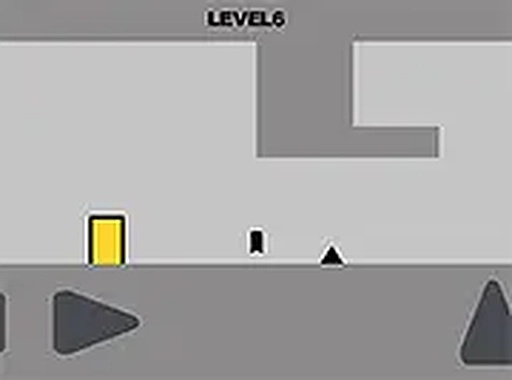
In Reaction Track Navigator, the primary activity involves moving a character from the start of a course to a designated exit point. The courses are filled with barriers that appear without a fixed pattern. This design forces players to remain constantly aware of their surroundings and adjust their path on the fly. The simplicity of the objective contrasts with the need for sustained attention, making each attempt a test of both patience and quick decision-making.
Course Design and Variety
Each course in the game introduces new configurations of obstacles. Some barriers may be positioned at ground level, while others might descend from above or slide in from the sides. The lack of repetition between stages keeps the experience fresh, as players cannot rely on memorization alone. Instead, success depends on reading the environment in real time and responding appropriately to each new challenge.
Controls and Accessibility
The game uses standard directional inputs, either through keyboard arrows or on-screen buttons, to control character movement. These controls are responsive and allow for fine adjustments, which is necessary when navigating tight spaces between obstacles. The interface is designed to be intuitive, so new players can start playing immediately without a lengthy tutorial. The game also supports full-screen mode, which can help players see the entire course layout more clearly.
Progression and Difficulty Curve
As players advance through the courses, the frequency and complexity of obstacles increase. Early stages might feature a few widely spaced barriers, giving players time to learn the controls. Later stages require faster reactions and more precise timing, as obstacles appear in quicker succession and from multiple directions. This gradual increase in difficulty ensures that players are constantly challenged without feeling overwhelmed too early.
Visual Style and Feedback
The visual presentation is clean and uncluttered, with clear distinctions between the character, obstacles, and the environment. When the character collides with an obstacle, the game provides immediate feedback by resetting the course. This clear cause-and-effect helps players understand what went wrong and encourages them to try a different approach. The straightforward visuals also ensure that the game runs smoothly on various devices, including mobile phones and tablets.
Replay Value and Mastery
Because each course presents a unique arrangement of obstacles, there is always a new scenario to tackle. Players who enjoy improving their performance can aim to complete courses with fewer restarts or in a shorter amount of time. The game does not include a scoring system, so the primary motivation comes from the personal satisfaction of overcoming each course. This focus on self-improvement gives the game lasting appeal for those who enjoy mastering precise movements.



Comments
0 comments